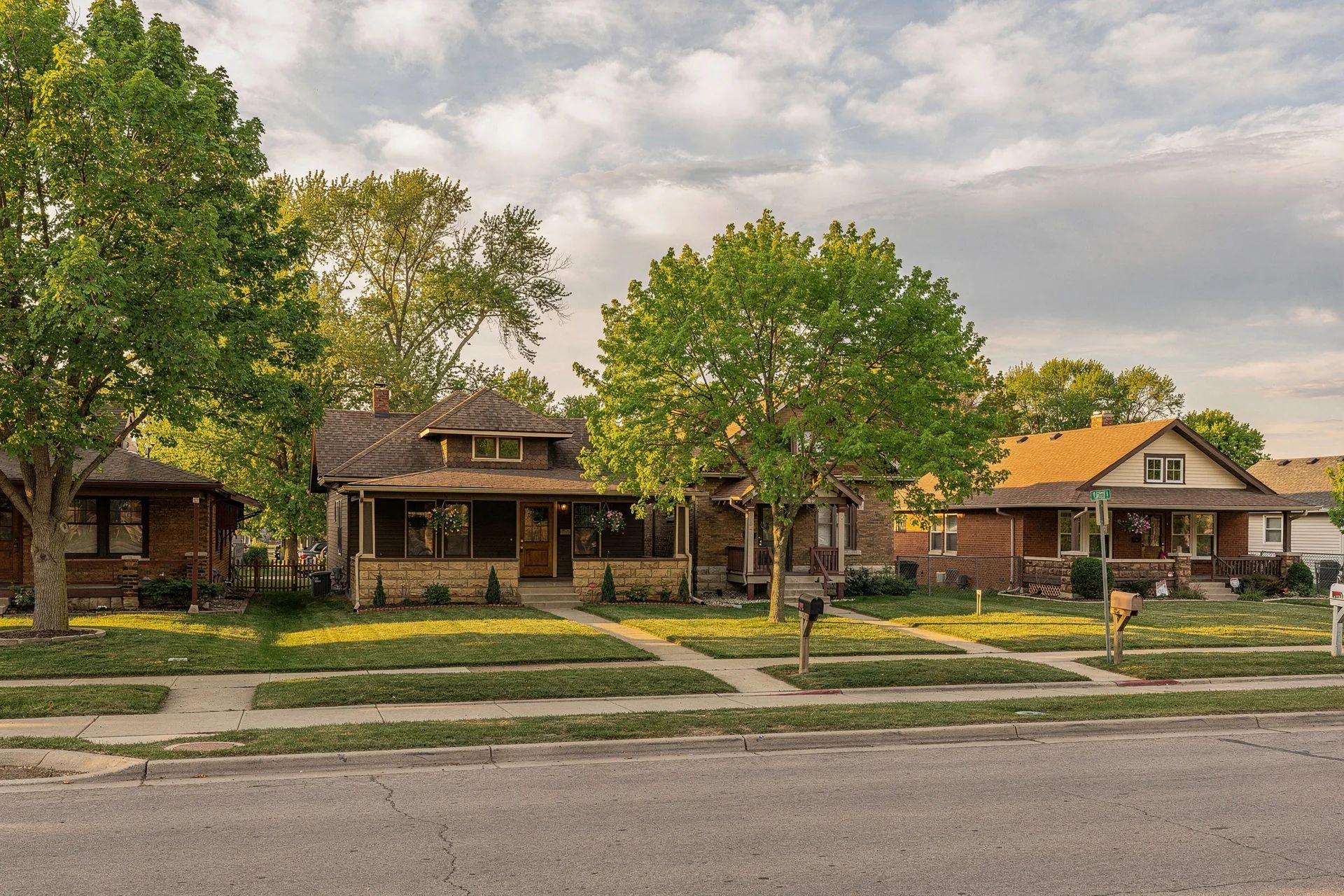
Topeka, Kansas
Foundation Repair in Topeka, KS
A driveway that sank, a basement wall with a long crack, doors that will not close right. Tell us what is going on and a local foundation repair contractor will get in touch to inspect it and give you a written estimate.
- Free inspection request
- Written estimate, no obligation
- Contractors who work in Shawnee County
Get a Free Foundation Inspection
Send a quick request. A local contractor will get back to you.
Repairs
Foundation Repair and Mudjacking Services in Topeka
Four kinds of work cover most of what Topeka homes need. They often go together: a sunken slab next to the house sends water to the wall, and a wet wall is the one that cracks.
Mudjacking & Concrete Leveling
Lifting sunken driveways, sidewalks, steps, patios and garage floors back to level instead of breaking them out.
Mudjacking & Concrete Leveling in TopekaFoundation Piers & House Leveling
Helical and push piers for a settling foundation, and leveling for sagging floors, slabs and pier and beam homes.
Foundation Piers & House Leveling in TopekaCrack & Bowing Wall Repair
Sealing leaking cracks and stabilizing basement walls that crack horizontally or lean in, from injection to straps and braces.
Crack & Bowing Wall Repair in TopekaBasement Waterproofing
Keeping storm water out of the basement with grading, drain tile and sump pumps, and taking pressure off the walls.
Basement Waterproofing in Topeka
- A short downspout drops roof water against the house
- The yard slopes toward the foundation
- Loose backfill soaks up water next to the wall
- Wet soil presses on the basement wall
- The wall cracks along its length and leans in
- Topsoil dries and pulls away in summer
- The footing sinks where the ground under it is soft
Why it happens here
Storms, River Valleys and Seasons That Swing
Topeka sits on both sides of the Kansas River, with valley ground near the river and rolling upland prairie above it. Valley soils can hold water after long rains, while upland lots shed water downhill, often toward the uphill wall of a house.
Heavy spring and summer storms load the soil around foundations with water, and hot, dry spells pull it back out. That swing is hard on concrete: walls take pressure when the ground is wet, footings and slabs lose support when it dries, and freezing winters work on every crack.
Older neighborhoods add block and limestone foundations that have seen many decades of this. Newer subdivisions have their own weak spot: fill around the house and under the driveway that keeps settling.
Topeka Foundation Facts, With Sources
40.8 feet
Crest of the Kansas River at Topeka on July 13, 1951, the highest on record there. High water broke through a dike and flooded North Topeka.
City license
All contractors doing work within the City of Topeka must be licensed by the City. Ask any contractor for their city license before work starts.
Many repairs
The City of Topeka requires permits for many residential repairs, additions and remodels. Inspections are required for various phases of the work.
Sidewalks
Kansas law makes the owner of the abutting property responsible for keeping the sidewalk in repair. Cities may repair it after notice and charge the cost to the property.
Source: K.S.A. 12-1808 (Kansas statutes)
Figures checked October 2026.
What Topeka homeowners usually notice first
A driveway or walk that dropped
Slabs next to the house often sit on fill that keeps settling. A section that drops or tilts toward the foundation is the most common reason Topeka homeowners call.
Doors that stick or swing open
When part of a house settles, frames go out of square. Doors rub, latches stop lining up, and diagonal cracks appear at the corners of openings.
A horizontal crack downstairs
A crack running along a basement wall, often with the wall leaning in, means soil and water are pushing on it. It is the pattern to have inspected first.
Floors that slope
A floor that runs downhill toward one wall can point to a settled footing. A dip in the middle of a room is more often a beam or post problem.
Cracks in brick or stone
Stair-step cracks in brick or limestone veneer, or a chimney pulling away from the house, are outside signs of the same movement.
Water after storms
Water at the bottom of basement walls after heavy rain shows saturated soil against the foundation. That same pressure is what cracks and bows walls.
Not sure if it is normal settling? Read our guide to signs of foundation problems.
Sunken concrete
Mudjacking: Lift the Slab Instead of Replacing It
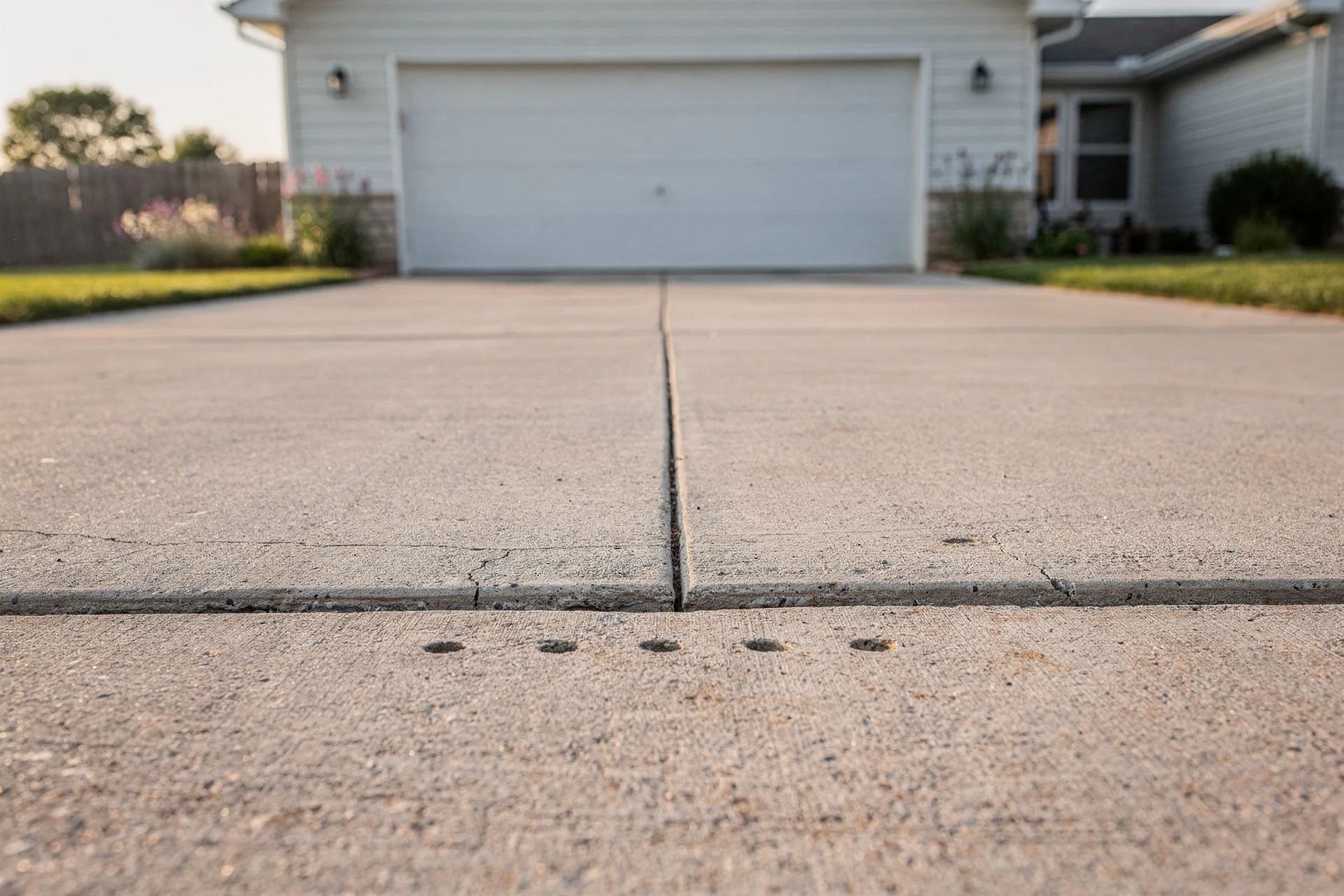
A driveway, walk, patio or set of steps that sank in one or a few pieces can usually be lifted back into place. Small holes are drilled through the slab, material is pumped underneath, and the slab rises as the gap fills.
- Mudjacking pumps a cement slurry: the lower-cost option, well suited to driveways and patios
- Foam leveling injects polyurethane foam through smaller holes: lighter and quicker to use
- Both work when the concrete is still in large, sound pieces
- Sealing the joint next to the house afterward keeps water from washing out the base again
Public sidewalks follow their own rules in Kansas. Read about mudjacking and concrete leveling in Topeka.
Under the footing
Piers for a Foundation That Keeps Settling
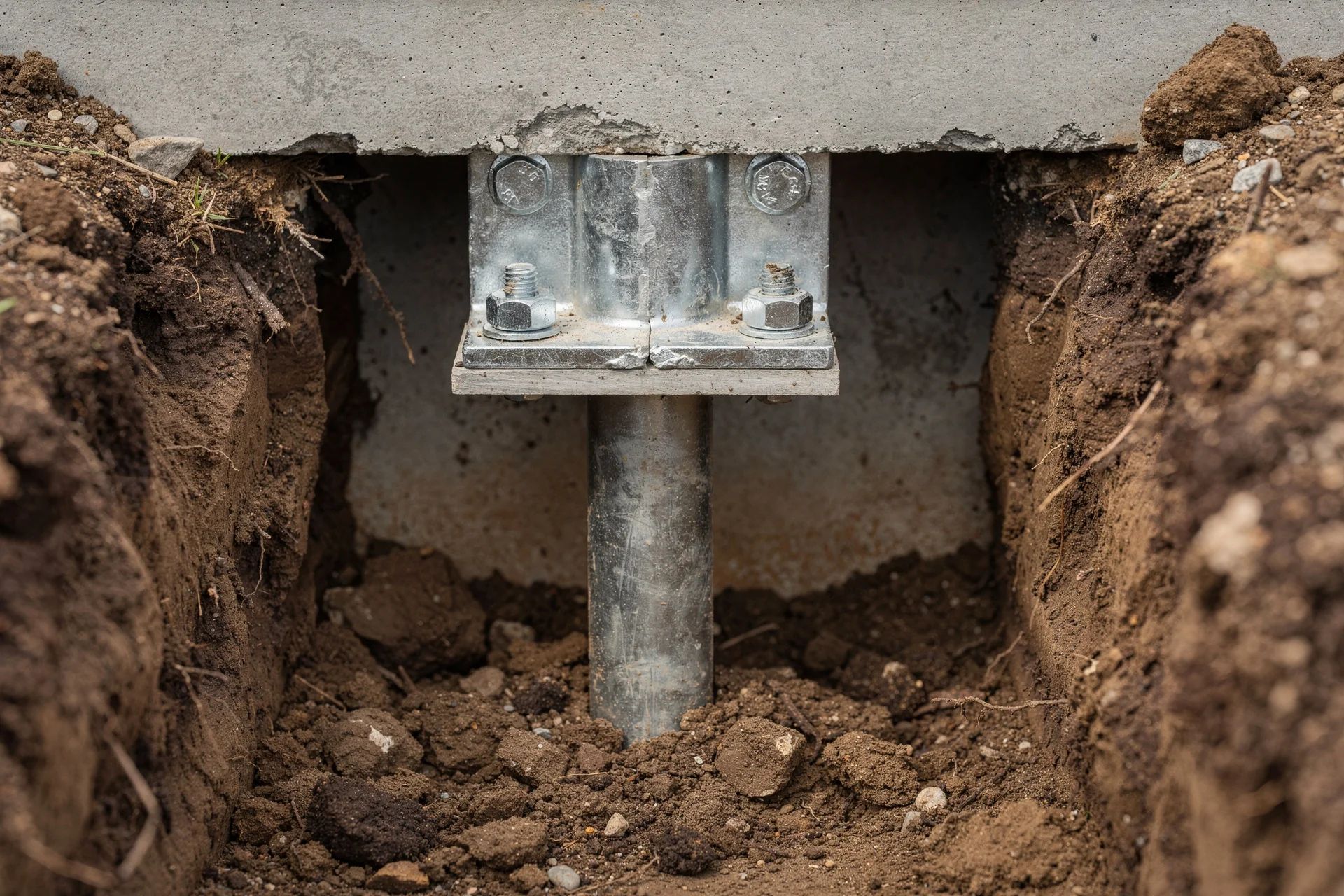
When the ground under part of a house cannot carry it, that part keeps sinking, and patching cracks does not stop it. Steel piers move the weight down to firmer soil below.
- Push piers are driven down in sections, using the weight of the house as resistance
- Helical piers are turned into the ground like large screws, suited to lighter loads and additions
- Once the piers hold, the house can often be lifted back toward level, slowly
- A footing that has sunk below its original level
- A small hole is dug next to the footing
- A steel bracket is fastened under the footing
- The steel shaft goes down through the soil
- Soft or wet soil near the surface cannot carry the load
- The pier bears on firm material below
- The footing is lifted, then locked onto the pier
Budget
Typical Prices Before Anyone Visits
These broad ranges help you plan. They are estimates, not quotes: the contractor who inspects your home gives you the real number, in writing.
| Type of work | Typical range |
|---|---|
| Mudjacking, one slab sectionA cement slurry pumped under a sunken walk, step, patio or driveway section. Bigger or deeper drops cost more. | $500 to $2,000 |
| Helical or push pier, eachPriced per pier. A settled corner may need a few, a whole wall many more, so compare totals. | $1,500 to $3,500 |
| Crack injection, each crackEpoxy or polyurethane injected into one poured-wall crack from inside. | $300 to $1,000 |
| Bowing wall straps or braces, per wallCarbon fiber straps for small movement, steel braces or anchors for more. | $2,500 to $12,000 |
What changes the price
- How many slabs, piers or walls
- How deep firm soil is
- Block, poured or limestone walls
- Access around the house
- Drainage added so it lasts
All job types in our guide to foundation repair cost in Topeka.
How it works
Three Steps to a Written Estimate
- Send a short request
Tell us what you see: a sunken slab, a crack, a door that sticks. Photos help the contractor come prepared.
- A local contractor looks at it
A contractor who works in the Topeka area calls to set up a visit, then checks the foundation, the floors and the concrete around the house.
- You get a written estimate
You see what they found, what they suggest and the price, in writing. Whether you go ahead is up to you.
Also see crack and bowing wall repair and basement waterproofing.
Before you sign
What a Good Foundation Inspection Covers
A careful inspection looks at the whole house and the concrete around it, not only the spot you called about. Use these lists with any foundation repair company.
What the contractor should check
- Each crack: where, which direction, how wide, and whether one side sits higher
- Basement walls measured for bowing or leaning
- Floor levels across the house
- Doors, windows and drywall upstairs
- Driveway, walks, steps and patios against the house
- Gutters, downspouts and how the yard drains
- Whether the movement looks active or old
Questions to ask before you hire
- Do you hold a City of Topeka contractor license, and can I see proof of insurance?
- How many piers, slabs or braces, and where exactly?
- Is the goal to stabilize only, or to stabilize and lift?
- Who pulls the permit, and is an engineer letter needed?
- Will your own crew do the work?
- What does the warranty cover, and does it transfer if I sell?
- What is restored afterward: concrete, landscaping, finished walls?
Service area
Towns We Serve Around Topeka
We take requests from Topeka and the small towns next to it. River-valley towns to the west, rural lots to the east and southwest, and Carbondale across the county line to the south each come with their own ground, housing and permit offices.
- Foundation repair in AuburnSmall city southwest of Topeka in Shawnee County, with homes on larger lots.
- Foundation repair in Silver LakeWest of Topeka along US-24, on the north side of the Kansas River valley.
- Foundation repair in RossvilleSmall town farther west along US-24 in the Kansas River valley.
- Foundation repair in TecumsehUnincorporated community just east of Topeka in Shawnee County.
- Foundation repair in CarbondaleSmall city south of Topeka along US-75, in Osage County.
Questions
Common Questions
Is the foundation inspection free?
Sending a request through this site costs nothing and commits you to nothing. The contractors who answer requests here offer a free in-home inspection and written estimate. Confirm it when they call, before the visit. A report from an independent structural engineer is a separate, paid service.
What does foundation repair cost in Topeka?
It ranges widely. Lifting one sunken slab or sealing one crack is a few hundred dollars. Piers under a settling corner or bracing a bowing wall usually run into the thousands, and rebuilding a wall can reach five figures. Our cost guide groups typical ranges by type of work. Only an inspection gives you a real number.
Should I mudjack my driveway or replace it?
Lifting is usually the cheaper choice when the slab sank in one or a few large pieces and the surface is still sound. Replacement makes more sense when the concrete is broken into many pieces, crumbling, or pushed up by roots. A contractor can tell you which applies after looking at it.
When should I call a structural engineer first?
For a sunken sidewalk or a single leaking crack, a contractor visit is usually enough. For a wall that has moved a lot, a house that keeps settling, or a home you are buying or selling, an engineer gives you an opinion from someone who is not selling the repair.
Get it looked at
A Crack That Grew or a Slab That Dropped?
Foundation movement and sinking concrete rarely fix themselves, and the repair usually grows with the damage. Send a request and a local contractor will call to schedule a visit.
Request a Free Inspection
Send a quick request. A local contractor will get back to you.